
WILDLIFE RESOURCES
Reporting Wildlife Abuse in San Diego County
If you witness or suspect cruelty, neglect, or illegal harm to wildlife—or if you find an injured or orphaned animal—you play a vital role in protecting our natural heritage.
This one page guide provides quick access to agencies that respond to wildlife emergencies, poaching, environmental violations, and animal cruelty throughout San Diego County. Use it to report urgent issues encountered on trails, preserves, or in your community.
If you witness a poaching or polluting incident or any fish and wildlife violation, or have information about such a violation, immediately dial the toll free CALTIP number 1 888 334-CALTIP (888 334-2258), 24 hours a day, seven days a week.
Or you may submit anonymous tips to CDFW using TIP411. TIP411 is an internet based tool that enables the public to text message an anonymous tip to wildlife officers and lets the officers respond back creating an anonymous two-way conversation.
Anyone with a cell phone may send an anonymous tip to CDFW by texting 'CALTIP', followed by a space and the message, to 847411 (tip411).
San Diego Humane Society – Project Wildlife
Injured or sick wild animals, wildlife in distress, public safety concerns.
Phone: 619 299 7012
After Hours Emergency Dispatch: 619 243 3466
Important Numbers
County of San Diego – Animal Services
Domestic animal cruelty, dangerous animals, some wildlife conflicts.
Phone: 619 767 2675
Environmental Reporting (Pollution / Habitat Damage)
County Environmental Hotline: 888 722 4234
CalEPA Environmental Complaint: calepa.ca.gov/complaints
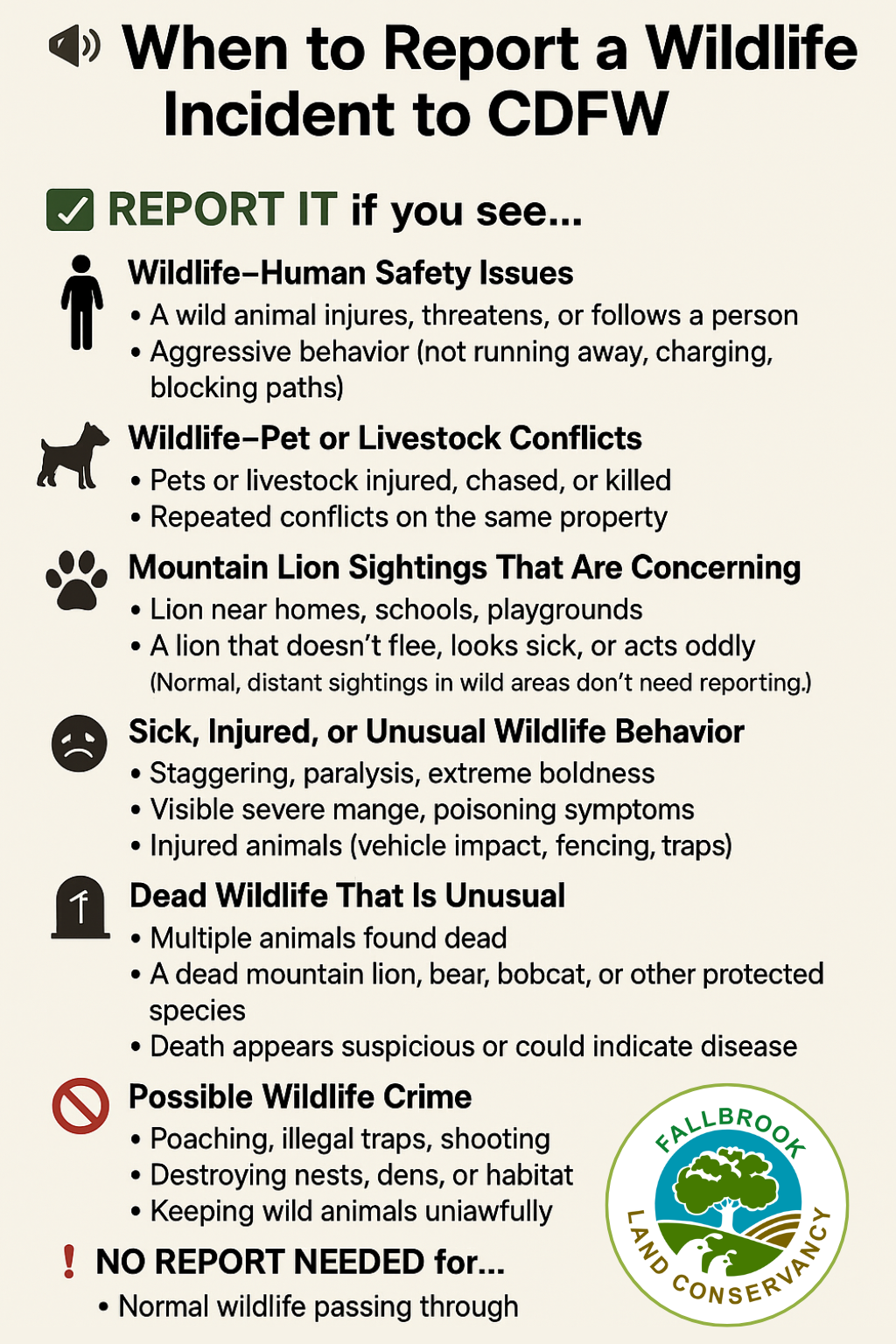
You should file a Wildlife Incident Report (WIR) with the California Department of Fish & Wildlife (CDFW) any time wildlife, humans, or domestic animals interact in a way that poses a risk, causes harm, or indicates unusual behavior. The following a list of when you should report, according to the CDFW.
1. A wild animal injures or threatens a person
Physical contact (bite, scratch, knock-down)
Aggressive or unusually bold behavior
(coyotes following people, a bobcat not fleeing, deer charging, etc.)
2. A wild animal injures or kills a pet or livestock
Attacks involving coyotes, mountain lions, bobcats, bears, or raptors
Repeated predation incidents on your property
3. A mountain lion sighting that is abnormal or concerning
Mountain lion seen near homes, schools, playgrounds, or acting boldly
A lion that does not flee, appears injured, or shows disorientation
(Note: Normal, distant sightings in wild habitat do NOT need reporting.)
4. Sick, injured, or unusually behaving wildlife
Animals showing signs of:
Rabies (staggering, aggression, paralysis)
Rodenticide poisoning
Severe mange
Injury from vehicles, fencing, or human activity
Birds with unusual illness patterns (potential avian flu)
5. Dead wildlife when the cause is unusual or unclear. Report wildlife mortality.
Multiple animals found dead at once (possible disease)
A dead mountain lion, bear, or other protected species
A poaching or illegal take suspicion
6. Potential wildlife crime
Poaching, trapping, shooting, or harassment
Illegal possession of wildlife
Someone destroying nests, dens, or habitat unlawfully
7. When your HOA, city, or land conservancy requests documentation. Often for:
Recurring coyote conflicts
Housing development impacts
Formal records for public safety policies
For more information and specific guidance on sighting and reporting, please contact CDFW directly.
If You Witness Immediate Danger or a Crime in Progress Call 911 and describe the situation clearly. Law enforcement can coordinate with wildlife officers.
When reporting, include: location (GPS if possible), species involved, photos/video (if safe), and a brief description of the situation.