
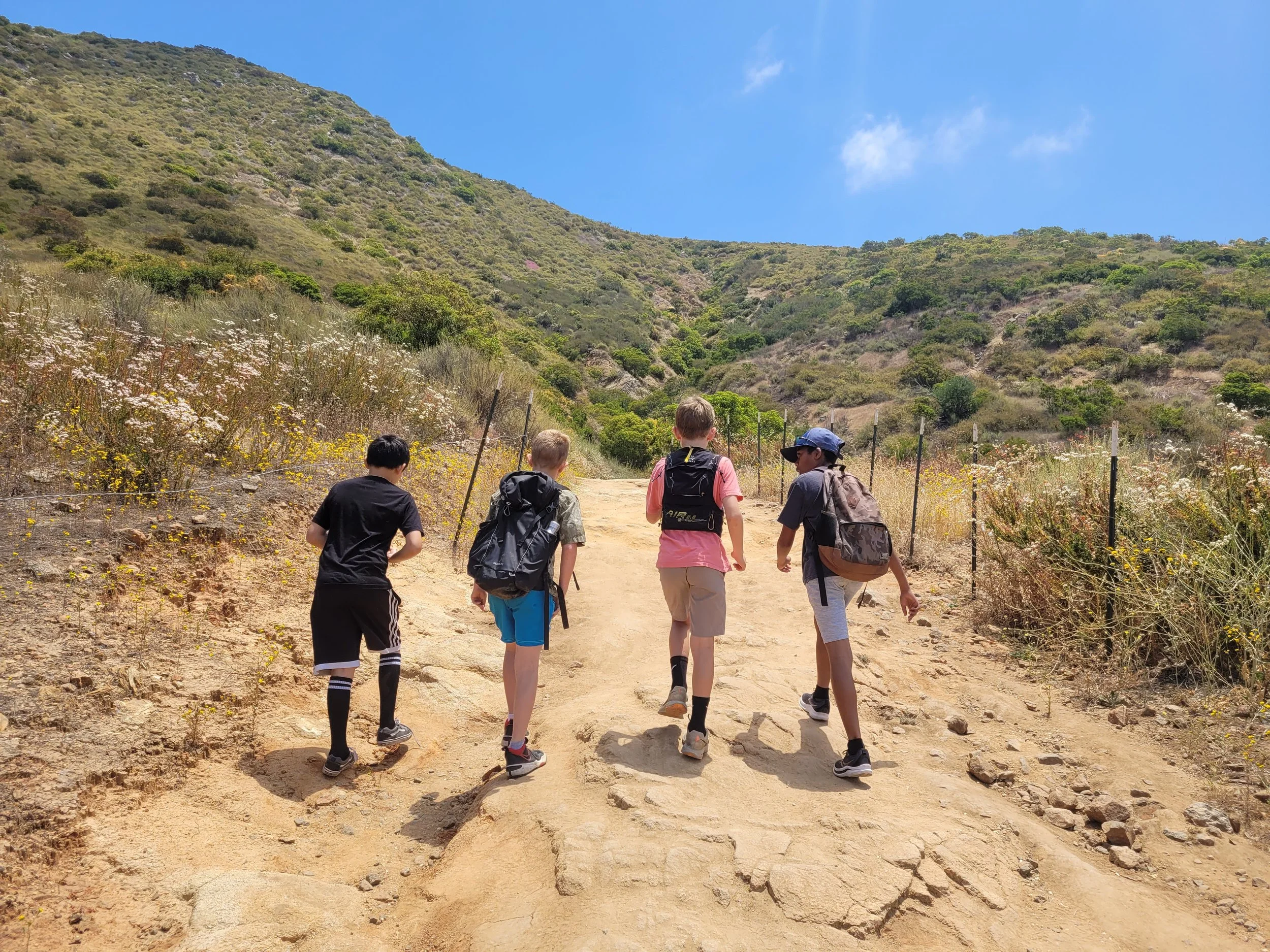
Safety & Etiquette
Trail safety & etiquette are the basic guidelines that help keep you, other visitors, and the environment safe when using preserves, parks, or hiking trails.
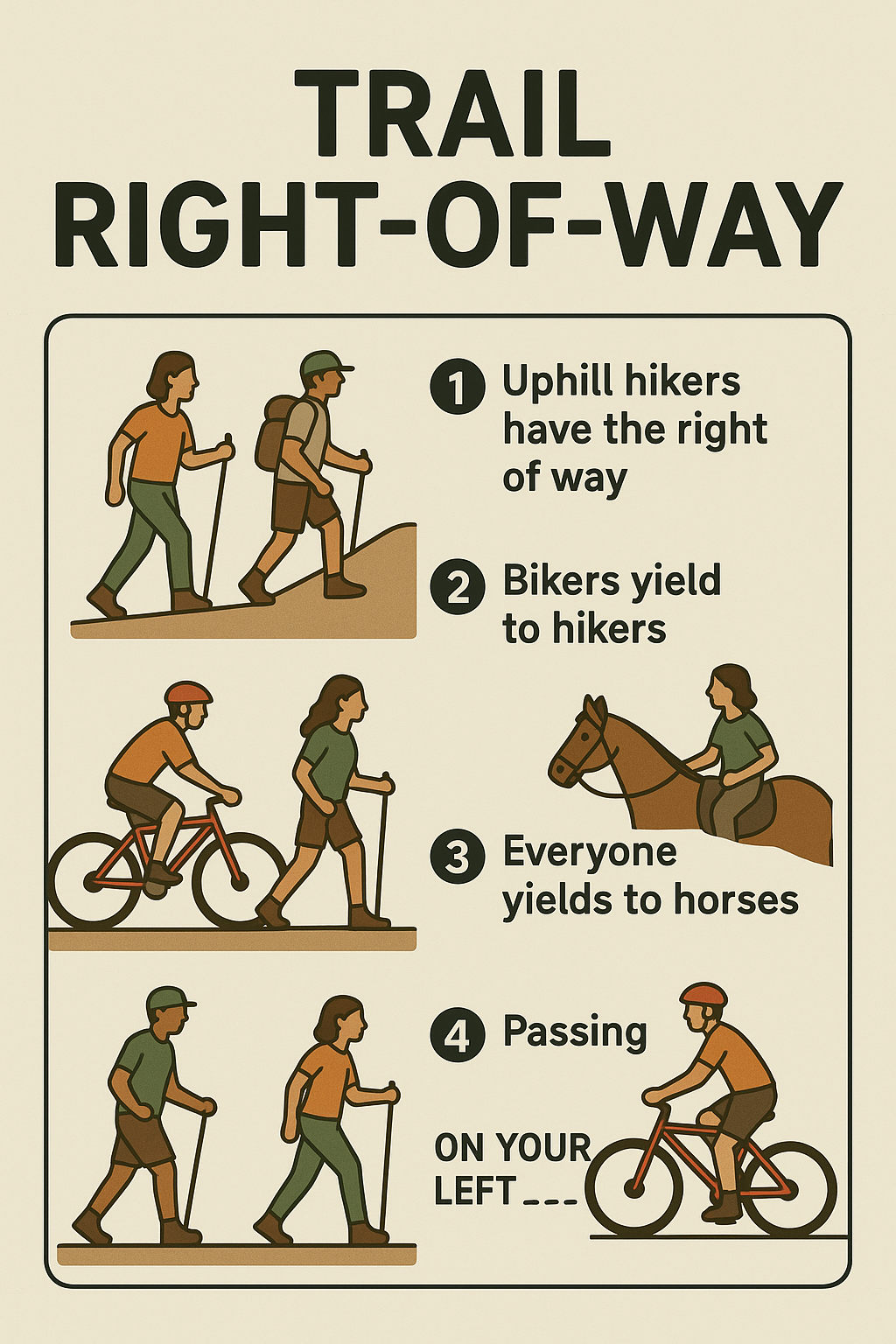
TRAIL RIGHT OF WAY
Uphill Hikers Have the Right of Way
If you’re hiking downhill, step aside or pause to let uphill hikers pass. Uphill hikers have more momentum and it’s harder for them to stop.
Bikers Yield to Hikers
Cyclists should slow down, announce themselves when approaching, and give hikers space to pass safely.
Everyone Yields to Horses
Horses can be startled easily. Step off the trail, speak calmly, and wait for the horse and rider to pass.
Passing
When overtaking someone moving in the same direction, give a polite warning (e.g., “On your left”) and pass carefully.
Stay on Your Side of the Trail
Keep right when trails are wide enough; it prevents collisions and trail damage.
Following right-of-way rules keeps trails safe, enjoyable, and minimizes conflicts between hikers, bikers, and equestrians.
To help protect our sensitive habitats, wildlife, and the experience of all visitors, e-bikes and other motorized vehicles are not permitted on Fallbrook Land Conservancy preserves.
RESPECT THE TRAIL
Be Aware of Your Surroundings
Always make sure you can hear what is going on around you. If you are listening to music or talking on the phone, please make sure you can still hear around you. Listen for other hikers or animals.
Stay On The Trail
Stay on the trail—because you may be trampling sensitive vegetation and stressing fragile, arid ecosystems. Our Native Plant and Trail Committees work hard to maintain healthy ecosystems, let’s keep them thriving!
Respect Trail Closures
Our Preserve Managers may choose to close parts of a trail for restoration or safety concerns. Respect the closures so that we can open them again soon.
Respect Private Property
A few of our trails pass through or adjacent to private property, including Los Jilgueros and Appleton Preserves. It is imperative that we all respect the privacy of neighboring landowners in an effort to prevent any access disputes. Do not trespass.
Our preserves are private property. FLC is a non-profit public benefit corporation. Our preserves are open to the public at FLC’s discretion.
Help us keep the trails maintained by joining our volunteer groups. Our Trails Committee helps to restore and keep our preserves safe!
LEAVE NO TRACE
Practice ‘Leave No Trace’ principles:
Plan ahead and be prepared.
Leave what you find.
Pack out what you pack in.
Do not litter. Use the trash cans at our trailheads.
Respect wildlife.
Be considerate of other users.
Leash your dog and pick up the poop.
Nobody likes coming across poop on the trail.

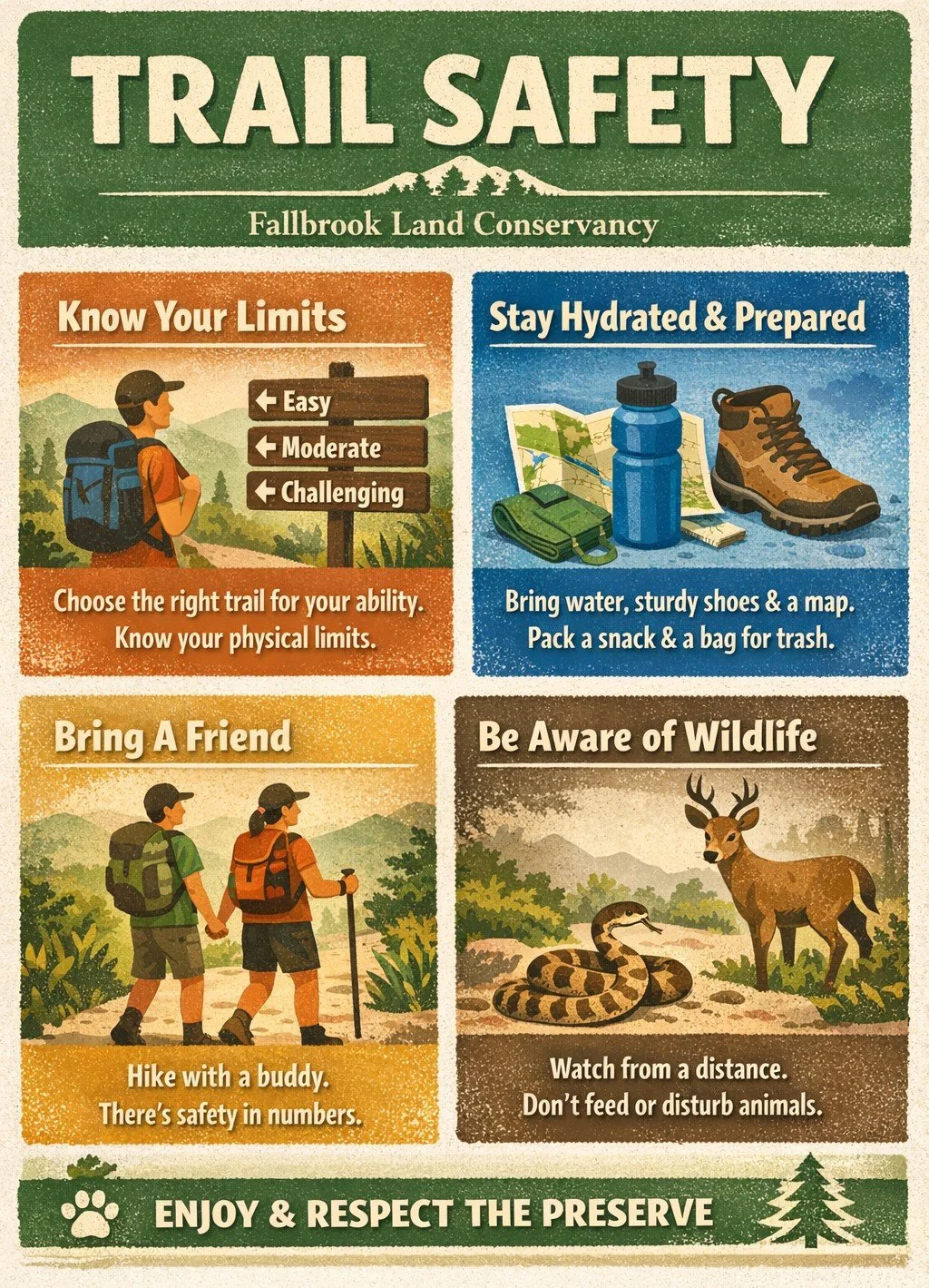
TRAIL SAFETY
Know Your Limits
We have preserves for every capability; know your physical limits so you can stay safe.
Stay Hydrated & Prepared
Bring water, wear sturdy shoes, and carry a map or phone if service is available. It’s wise to pack a snack and an empty plastic bag to pack out your trash.
Bring A Friend
There’s safety in numbers. Hiking in pairs is safer in case of accidents or emergencies.
Be Aware of Wildlife
Observe animals from a distance; do not feed or disturb them.
Coyotes: Coyotes are a natural part of Fallbrook’s landscape, helping maintain balance in our local ecosystems. While generally shy, they can occasionally come near homes. Here’s how to coexist safely:
Never feed coyotes. Feeding them encourages bold behavior and can create conflicts.
Pet protection; Supervise small pets, especially at dawn or dusk. Keep cats indoors and small dogs on a leash or in a secure yard.
Store garbage in coyote-proof containers. Bring pet food and bird feeders inside at night.
If a coyote approaches, make yourself look big and loud. Wave arms, shout, and throw small objects toward (not at) the animal to encourage it to leave.
Contact local animal control or wildlife authorities if a coyote appears sick, injured, or unusually aggressive.
WILDLIFE SAFETY
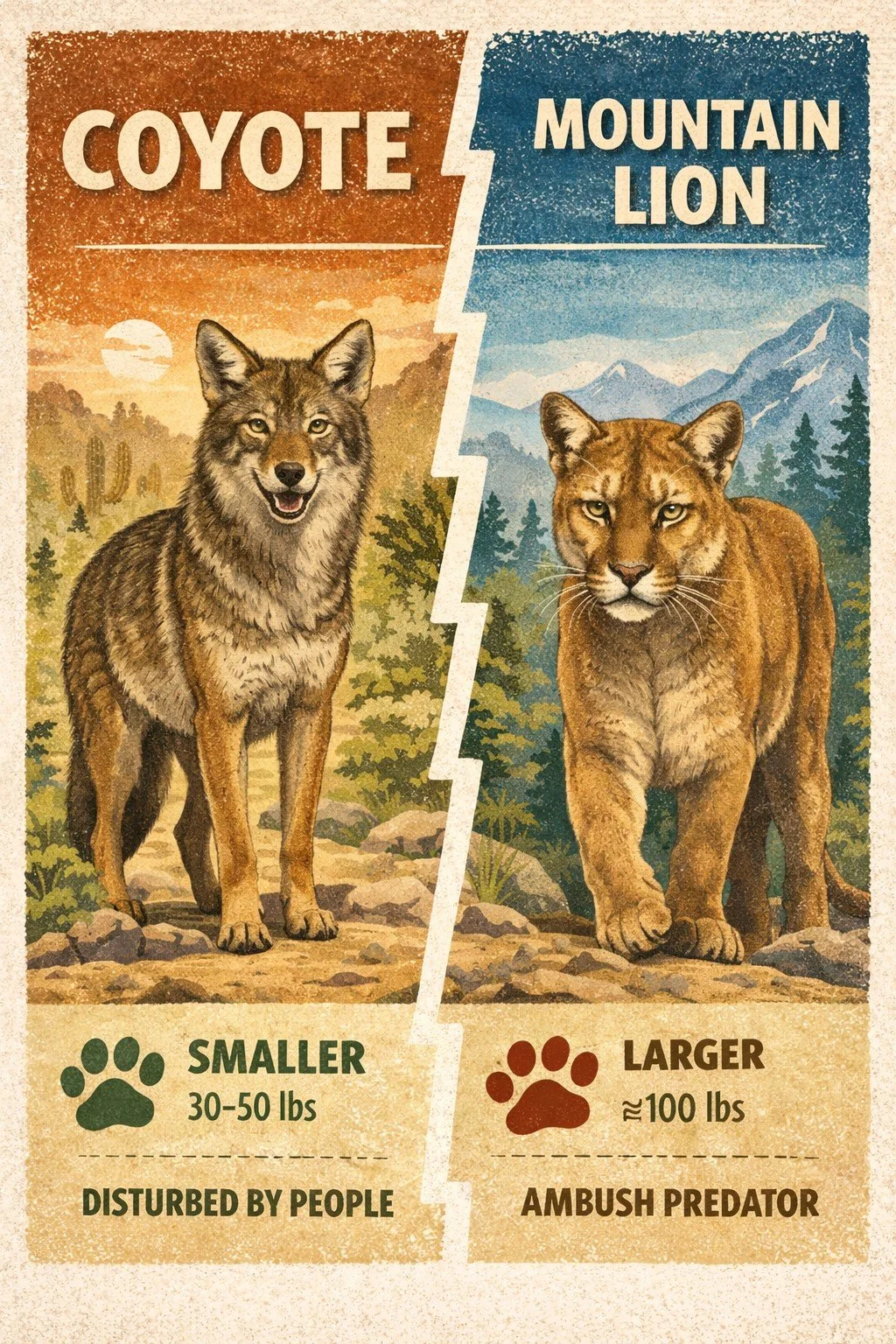
Mountain Lions: While attacks are extremely rare, it’s important to take precautions to keep yourself, your family, and pets safe.
Be aware of your surroundings, especially at dawn and dusk, when mountain lions are most active. Hike in groups and keep children close.
Keep small pets indoors or on a leash. Use secure enclosures for chickens or other livestock.
If you encounter a mountain lion, stand tall, wave your arms, and speak firmly. Do not run, as this can trigger a chase response.
Contact local animal control, the California Department of Fish & Wildlife, or 911 if a mountain lion appears aggressive, injured, or unusually bold.
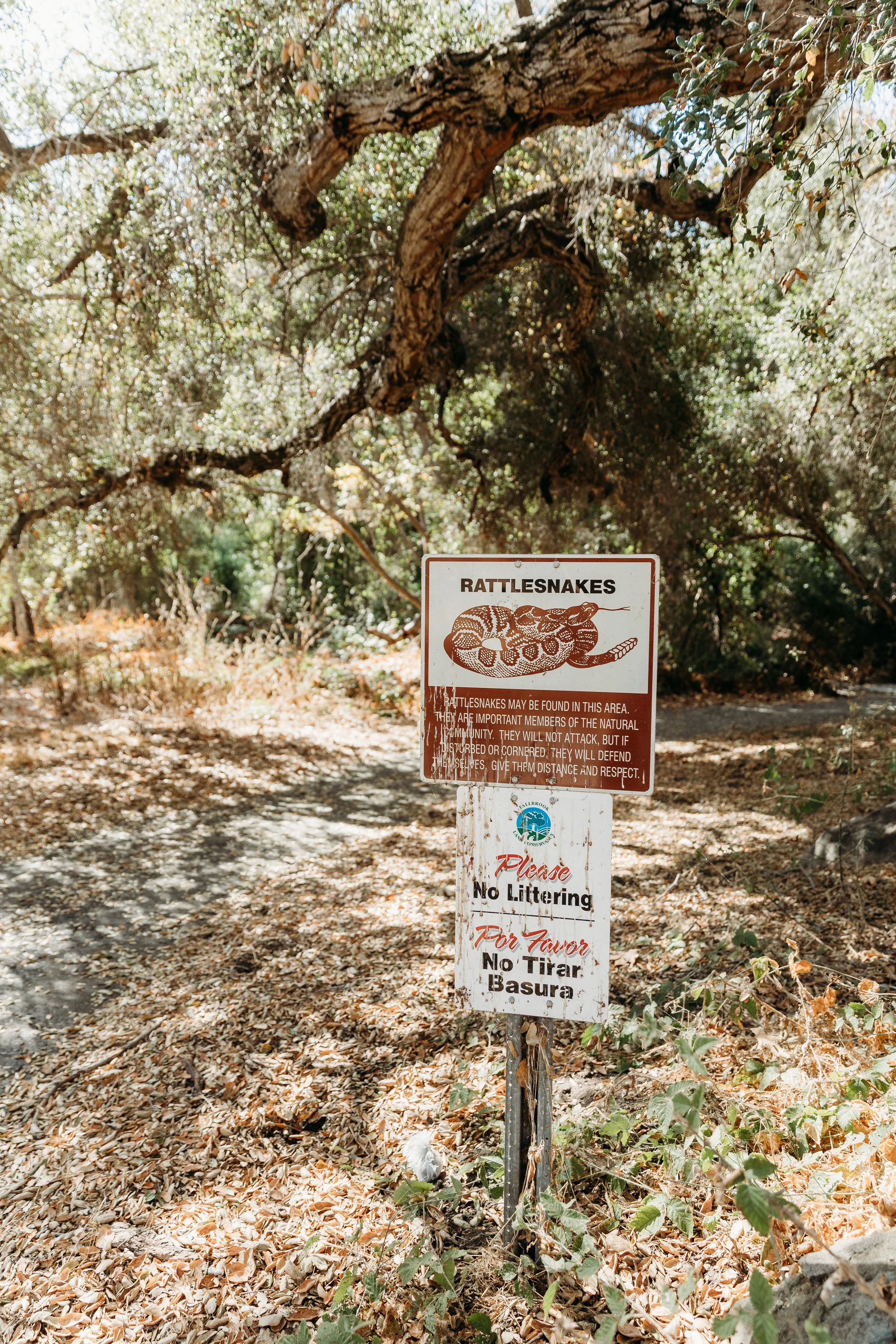
Rattlesnakes: You’re far more likely to encounter a rattlesnake on a trail than a mountain lion, though both deserve caution and respect.
Stay on the trail. Avoid tall grass, rock piles, and brush where snakes may hide. Keep to the center of trails whenever possible.
Look carefully at where you place your hands and feet, especially when climbing or stepping over rocks. Wear boots and long pants for extra protection.
If you see a rattlesnake, stop and back away slowly. Do not attempt to touch, capture, or provoke the snake.
Small dogs are particularly at risk. Maintain control and keep pets close to you on the trail.
In the rare event of a bite, call 911 immediately. Keep the victim calm and still, and do not try to suck out the venom or apply a tourniquet.
For more information, call the California Poison Control System at (800) 222-1222.
The Red Diamond Rattlesnake (Crotalus ruber) is a Species of Special Concern, making it the only protected rattlesnake in the state. Declining habitat and human interactions are limiting this species range.
Southern California’s open spaces are alive with incredible biodiversity. From sun-soaked chaparral to oak woodlands and riparian corridors, our local preserves provide vital refuge for hundreds of species that call this region home. We close our preserves after dusk to provide 12 hours for animals to thrive. For more information on our wildlife friends, view our wildlife guide!